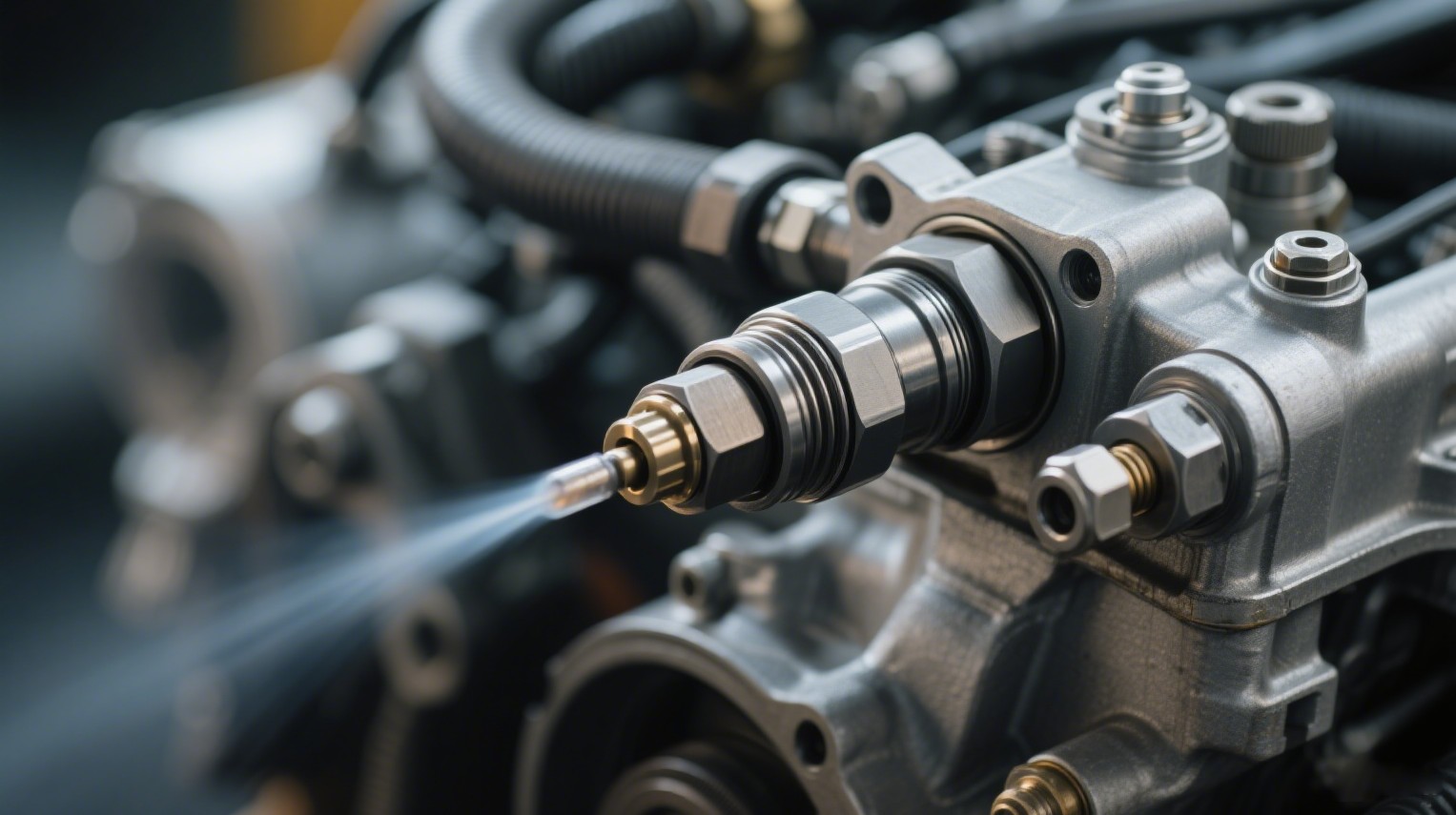
Many diesel truck owners have a black and white view about fuel injectors: They either work, or they don’t. Nothing in between. But diesel injectors – past or present – don’t work that way. The fallibility of fuel injectors isn’t in their on/off performance, but the gradual decline in spray patterns, flow rates, and other performance metrics that lead to poor engine performance.
That’s also the real threat. Not sudden failure, but the long, quiet deterioration that could result in an engine rebuild.
How multi-stage injection protects mechanical components
Modern common rail systems do not inject all fuel at once; several events per injection cycle, spaced milliseconds apart, can occur. For example, the pilot injection – a small amount of a fuel injected just prior to the main charge – begins the process of heating up the combustion chamber prior to the main event. This also softens the rate of pressure rise and contributes to the fast fuel injector needle lift, which is beneficial for reducing PM emissions in a subsequent post injection.
The mechanical issue at play here is direct: sharp pressure spikes give the crankshaft and the connecting rods a harder whack, so to speak. Over hundreds of thousands of cycles, this shock loading can lead to metal fatigue. A well-timed multi-stage injection also spreads the combustion pressure rise over a slightly longer window.
There is a slight (and beneficial) increase in peak cylinder pressure; more importantly, the peak stress on every rotating component in the engine’s bottom end is reduced. Post injection raises the temperature of the exhaust gasses, helping to oxidize the soot. This in turn supports EGR functions by providing cleaner combustion – less of the carbon gets recycled back through the intake system to eventually contaminate the oil.
Atomization, oil dilution, and why droplet size matters
Fuel atomization plays a vital role when it comes to increasing surface area. The finer the mist is, the easier it burns. Also, the more complete the combustion is, the less fuel is being wasted. The explanation is that unburned fuel circulates past the piston rings and enters the oil pan, causing engine oil dilution. This happens a lot more than people think, particularly with aged and worn injectors.
In today’s common rail systems, the fuel is injected into the fuel raceway at pressures up to 29,000 PSI. We’re talking some serious precision that this nozzle head has to spray in. As little as a 5-micron fluctuation in nozzle height (wear) can lead to a material reduction in fuel economy before any other symptoms show. More importantly, as the nozzle tip deteriorates over time, the flow orifices also become larger, and the once super-precise fuel mist spray gradually degrades, offering more significant droplets the opportunity to escape combustion and enter your oil stream.
The solution is a continuous fuel filtration system with the best possible micron rating. The thought that you can get away with a 10- or 5-micron filter “because it’s still smaller than the orifice” is a misnomer. The restrictions offered by filters are rated in β-ratio and micron size. Up to a certain point, the smaller micron-rated filter removes even more particles than its rating under X-ray florescence suspension testing. Of course, the higher efficiency in fuel filtration, the safer the injectors.
Matching injectors to engine architecture
No two diesel injectors are made equal. They must have the correct spray angle and flow rate to complement the combustion chamber geometry, compression ratio, and piston crown design of the engine they’re designed for. An injector with an incompatible spray angle will direct fuel spray onto the cylinder wall rather than directly into the air charge, inducing a hot spot on the cylinder wall which can cause the piston crown in the affected area to either crack or erode under sustained load.
This is why there’s no substitute for platform-driven engineering. For operators of heavy-duty work trucks, opting for high-tolerance fuel injectors for 6.7 Cummins engines is critical to protecting the reliability of one of the most popular diesel engine platforms in commercial and fleet use. The 6.7’s combustion design requires precise flow balance and spray geometry, and these stats just aren’t present in most generic replacements, manifesting first as accelerated wear from an increasingly grungy cylinder bank.
For the motor to remain thermally balanced, all cylinders must receive the same volume of fuel at the same point in the combustion cycle from each injector. A single injector hitting 4% lean can be approximated here as delivering 4% less fuel than the others with respect to the volume. The result is a temperature imbalance that the ECU can only do so much to correct.
Internal coatings and the ULSD problem
Ultra-low sulfur diesel was brought into play to reduce emissions, and it has indeed been successful. The bad news, it turns out that sulfur provided both measurable fuel efficiency and lubricity to previous gens of diesel fuel. ULSD simply wears down high-precision injector internal tolerances faster than it should because there’s less naturally occurring lubrication between needle and seat.
Diamond-Like Carbon (DLC) coatings for injector needle assemblies and internal wear surfaces are a direct response to this issue. They reduce friction without adding meaningful tolerances to the component. The result is an injector that can handle the lower lubricity of modern fuel without wearing down the aforementioned surfaces that allow the injector needle to measure in microns the precise quantity of fuel delivered.
Hydrostatic lock is the failure mode nobody wants to discuss until it happens. A leaking injector that drips fuel into a cylinder overnight can actually hydraulically lock an engine on its next start attempt, snapping a connecting rod. It’s a dramatic endpoint to a failure that began with degraded internal tolerances months earlier.
The practical takeaway is diesel engine longevity isn’t primarily a maintenance schedule problem. It’s an injector quality problem. The component metering fuel at 29,000 PSI millions of times a year determines whether the rest of the engine survives the workload you put on it.